Concept Development (CGP2014), University of Lincoln · January 2024 · Team of four · Project page: Eternal Ascent
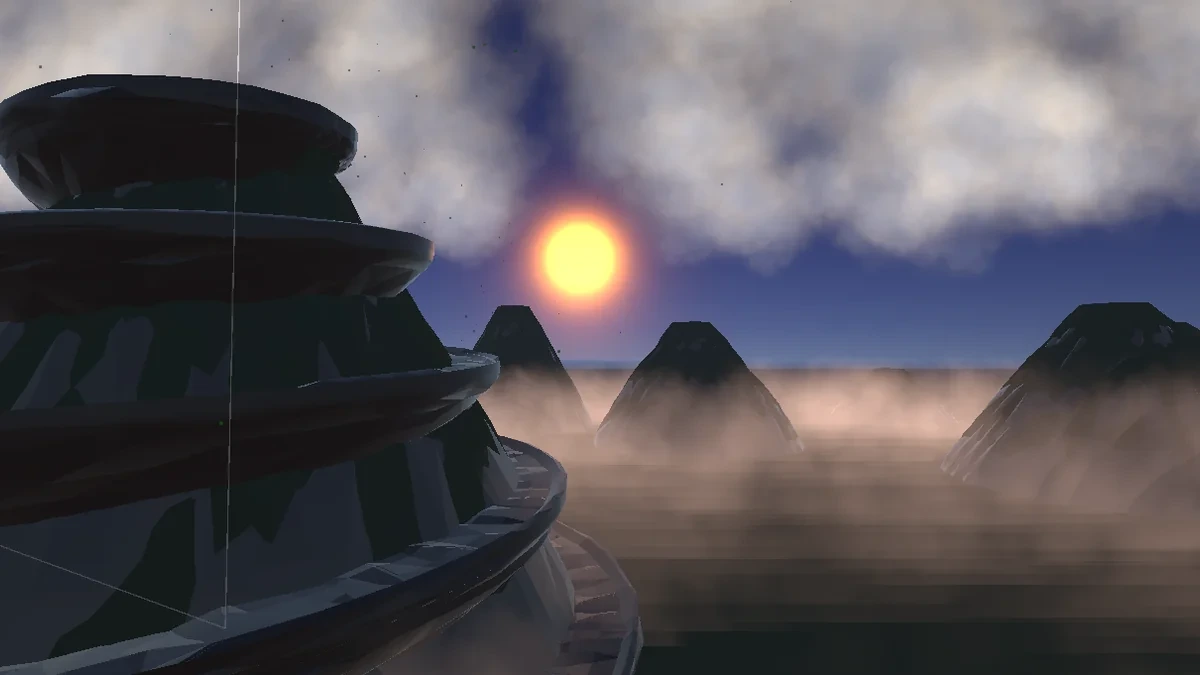
The concept
You play a First World War soldier on White Friday, pushing an artillery piece up a snowbound mountain. As the climb wears on, the soldier starts to see himself as Sisyphus, condemned to push a boulder uphill forever, and the world shifts between a war-torn slope and a sunlit, ancient-Greek hillside. It plays as a Foddian game: one mistake and the boulder rolls back down.
A narrator ties the two stories together, drawing on Camus and the idea that you have to imagine Sisyphus happy. And when you finally reach the top, an avalanche takes you, and a new soldier appears at the bottom of the mountain. The game never ends, because the war’s burden gets passed on.
Prototype 1: too many ideas
Our first paper prototype was a puzzle game where you push a boulder to solve puzzles, with the narrator touching on many famous battles, such as Normandy and Kursk. The feedback was positive but honest:
- The story was hard to follow. Too many battles were competing for attention
- Constant narration was distracting while people were trying to play
Prototype 2: one battle, one mountain
So we cut back. We focused on a single battle, White Friday, and changed the genre from puzzle game to Foddian climber. Narration moved to the quieter moments between sections of play.
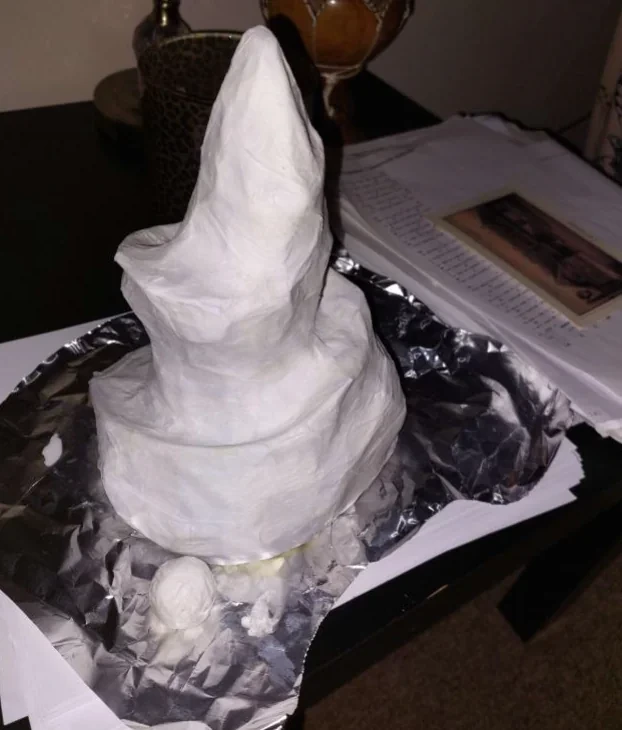
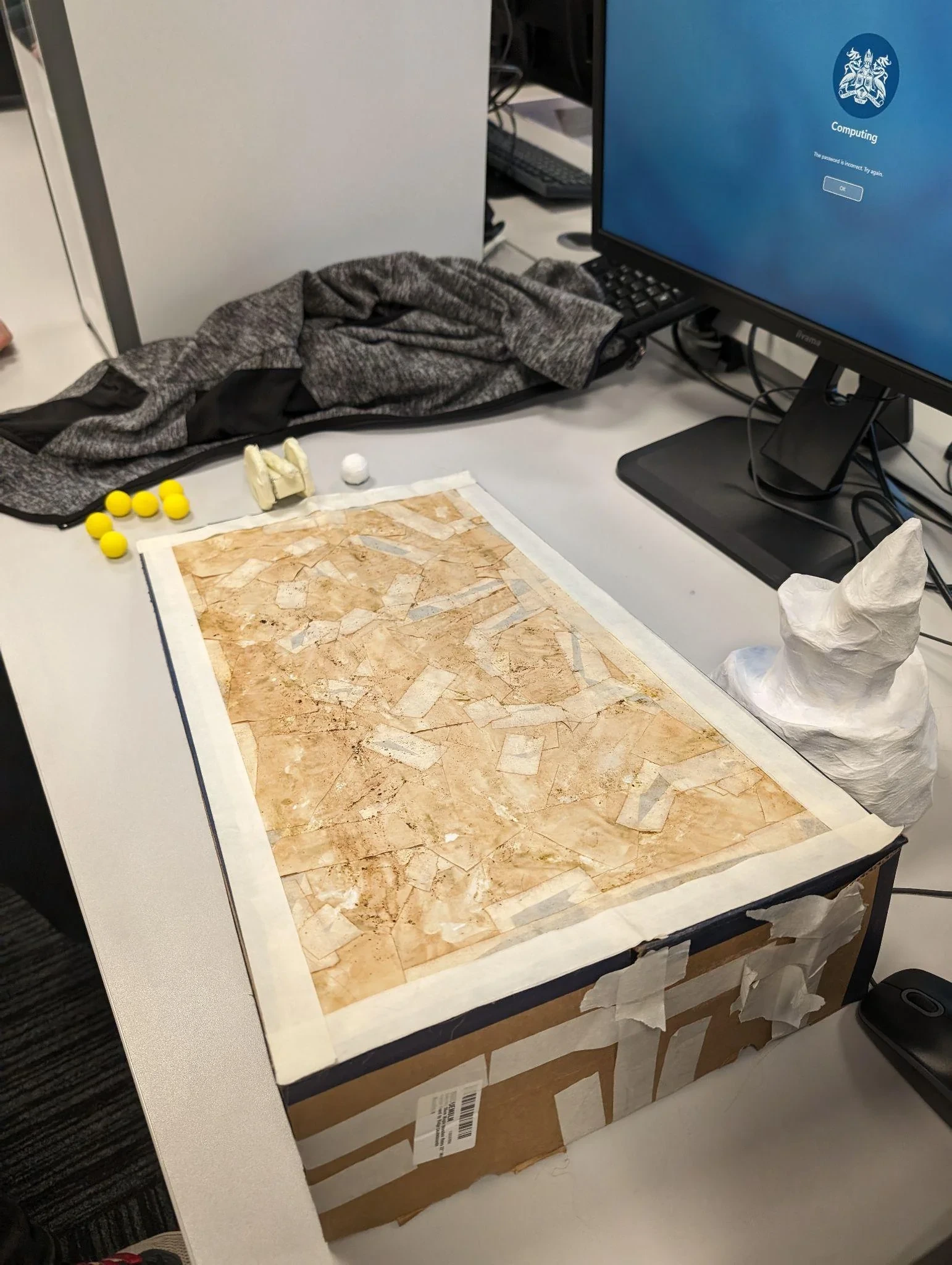
Then we built it physically: a papier-mâché mountain, a cardboard ramp, and tinfoil models of the artillery and boulder. In playtests, one person pushed the boulder up the ramp while yellow balls rolled down as hazards to dodge, and a team member read the narration live. A physical prototype meant anyone could give feedback on how it played, without any code or art getting in the way.
The digital prototype
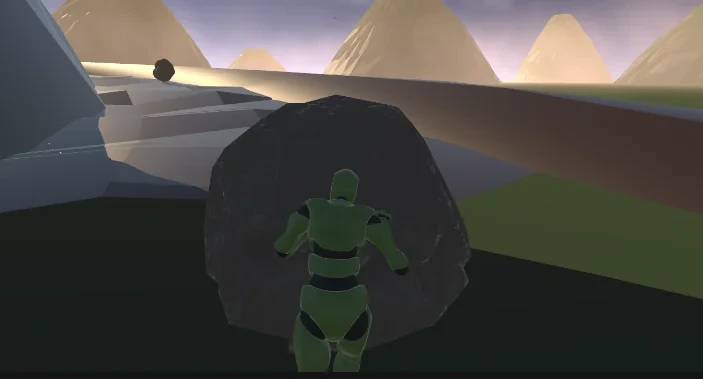
We rebuilt it in Unity: a corkscrew-shaped mountain, a physics-driven boulder that rolls back if you let go, a player who aligns to the slope as he climbs, animations, wind, falling rocks, snow and fog particle effects, custom skyboxes for the two worlds, and a title screen and options menu. We planned the work with a Gantt chart and every task met its deadline.
What playtesting fixed
- The boulder got stuck on slopes after a last-minute tweak to its handling. GitHub history let us step back through the changes and find the value that caused it
- Players sometimes got stuck letting go of the artillery, halfway between states. A fail-safe now snaps them out of it
- The snow missed the mountain. It was falling around it and in the background, so we added layers of snow aimed straight at the climb
- The Sisyphus sunset was too dark to see obstacles, so we brightened the skybox and sun, and kept the darker version for the ending
What I learned
Paper prototyping felt a bit silly at first, but it saved us from building the wrong game. The first round showed us the story was overloaded before we’d written a line of code. Cutting ideas turned out to be the most useful design decision we made.